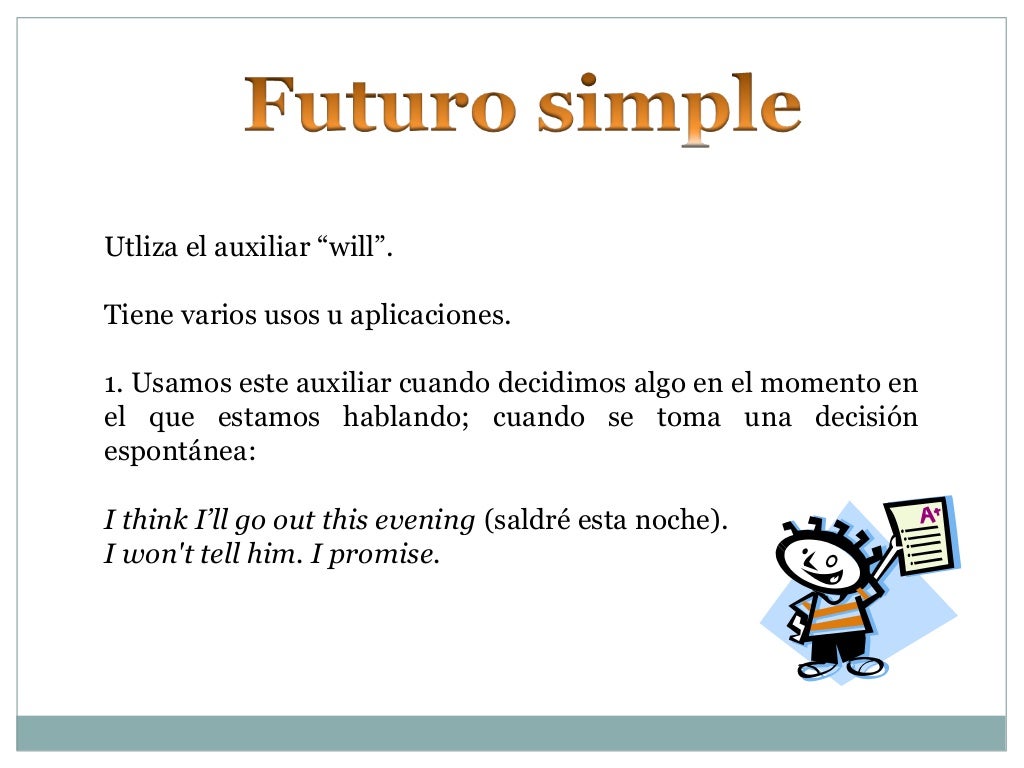
"SIMPLE FUTURE"
El futuro simple en inglés se utiliza para expresar acciones
que ocurrirán en el futuro. Se forma utilizando el verbo auxiliar
"will" seguido del verbo principal en su forma base (infinitivo sin
"to"). Aquí te presento la estructura y ejemplos de oraciones
afirmativas, negativas e interrogativas en el futuro simple:
Estructura:
- Oración
afirmativa: Sujeto + will + verbo principal.
- Oración negativa:
Sujeto + will not (won't) + verbo principal.
- Oración
interrogativa: Will + sujeto + verbo principal?

Oraciones afirmativas:
- She will visit
her grandmother tomorrow. (Ella visitará a su abuela mañana.)
- They will finish
their homework before dinner. (Ellos terminarán su tarea antes de la cena.)
- He will learn to
play the guitar next year. (Él aprenderá a tocar la guitarra el próximo año.)
Oraciones negativas:
- She will not
(won't) arrive late for the meeting. (Ella no llegará tarde a la reunión.)
- They will not
(won't) buy a new house this year. (Ellos no comprarán una casa nueva este
año.)
- He will not
(won't) forget your birthday. (Él no olvidará tu cumpleaños.)
Oraciones interrogativas:
- Will she come to
the party with us? (¿Vendrá ella a la fiesta con nosotros?)
- Will they travel
to Europe next summer? (¿Viajarán ellos a Europa el próximo verano?)
- Will he finish his work on time? (¿Terminará él su trabajo a tiempo?)
En las oraciones interrogativas, el verbo "will"
se coloca antes del sujeto, y en las negativas, se utiliza "will not"
o su forma contraída "won't" antes del verbo principal.
Para que tengan más conocimiento sobre el tema de futuro simple les adjuntamos un video que sabemos que les será útil, ver...


No hay comentarios.:
Publicar un comentario